

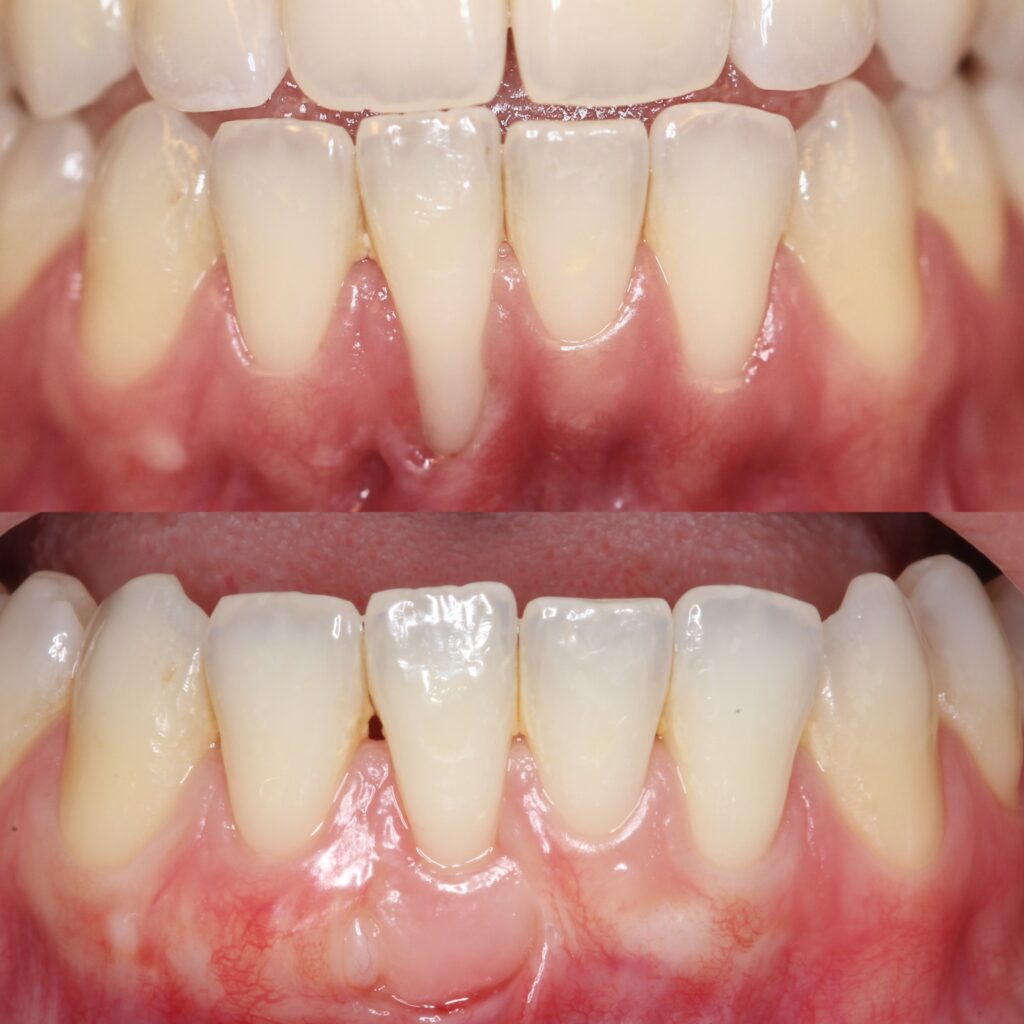
Gum grafting is a proven surgical treatment for gum recession — a condition in which the gum tissue gradually pulls back from the tooth, exposing the sensitive root surface beneath. This is not only an aesthetic concern: exposed tooth roots are significantly more sensitive to hot and cold stimuli, are at higher risk of decay, and if left untreated, recession can ultimately lead to tooth loss. At our practice in Freienstein, we offer gum grafting to restore the natural gum line and permanently protect exposed root surfaces.
Gum recession has several common causes, including overly aggressive tooth brushing, periodontal disease (gum disease), orthodontic treatment that moves teeth beyond their bone housing, thin gum tissue by nature, or habits such as teeth grinding (bruxism). Identifying the underlying cause is an essential first step, as grafting alone will not prevent future recession if the trigger is not addressed. Our team assesses each patient individually before recommending a treatment plan.
Maintaining good oral health through biological prophylaxis is one of the most important steps in preventing further gum recession after grafting.
We perform gum grafting using gentle microsurgical techniques, which allow for greater precision, smaller incisions, and significantly faster healing compared to conventional methods. The most commonly used technique is the connective tissue graft, in which a small amount of tissue is taken from the palate and carefully placed at the site of recession. This method achieves highly natural-looking results and provides stable, long-term root coverage.
In many cases, gum contouring may complement grafting to achieve a fully harmonious and balanced smile line.
At our Freienstein practice, we routinely combine gum grafting with PRF therapy (Platelet-Rich Fibrin), a biological treatment derived from the patient’s own blood. PRF contains a high concentration of growth factors and fibrin that actively support tissue regeneration. Applied at the surgical site, it accelerates healing, reduces swelling, and improves the integration of the graft into the surrounding tissue — all without any synthetic additives.
The entire procedure is carried out under local anaesthesia, so you will not feel pain during surgery. The operation typically takes between 60 and 90 minutes depending on the extent of recession and the number of teeth treated. We will provide you with detailed aftercare instructions following your appointment, including dietary guidance and recommendations on oral hygiene during healing. Most patients return to their normal daily activities within a few days.
Gum grafting, when combined with proper aftercare and the elimination of causative factors, produces results that are stable over many years. Clinical studies show that connective tissue grafts achieve root coverage rates of over 90% in suitable cases. We schedule follow-up appointments to monitor healing and ensure that the gum tissue is integrating as expected. Our holistic approach to oral health — including our commitment to metal-free dentistry — means that all materials used in your treatment are chosen with biocompatibility in mind.
The procedure itself is completely pain-free thanks to local anaesthesia. You may experience mild discomfort at the donor site on the palate in the days following surgery, but this is easily managed with standard pain medication prescribed by our team. Most patients report that post-operative discomfort is less than they anticipated.
Most patients feel comfortable returning to work and everyday activities within two to four days. Full tissue healing typically takes two to four weeks, during which time we recommend soft foods and careful oral hygiene around the surgical site. We provide comprehensive aftercare instructions at your appointment and are available for any follow-up questions during your recovery.
Yes. The connective tissue graft technique we use is specifically designed to produce a natural-looking gum margin that blends seamlessly with the surrounding tissue. The colour and contour of the grafted gum closely match the adjacent gum tissue in the vast majority of cases. The microsurgical approach we use contributes to fine, minimal scarring and aesthetically pleasing outcomes.
Absolutely. Gum grafting can be carried out alongside other restorative and aesthetic treatments. For patients who have experienced significant tooth loss alongside recession, we may also discuss ceramic implants as a complementary long-term solution. Our team will assess your individual situation during a personal consultation and recommend the most appropriate combination of treatments for your needs.