

When decay has damaged tooth structure, the resulting defect needs to be restored with a reliable, aesthetically pleasing filling. At our practice in Freienstein, we exclusively use metal-free, biocompatible materials — a considered alternative to amalgam and other metal-containing restorations. This approach aligns with our broader commitment to metal-free dentistry and ensures that every restoration we place is as gentle on the body as it is on the eye.
Ceramic inlays are custom-fabricated restorations produced in a certified dental laboratory to millimetre precision. The inlay is bonded permanently into the prepared tooth cavity, creating a seamless, durable result that closely mimics the appearance and function of natural enamel. Feldspathic porcelain and lithium disilicate ceramics are among the materials we use, selected for their outstanding biocompatibility, colour stability, and wear resistance comparable to natural tooth enamel.
Ceramic inlays are particularly well suited to larger cavities or areas of the tooth that bear significant chewing load. Because they are fabricated outside the mouth under controlled laboratory conditions, the fit is exceptionally precise, which in turn reduces the risk of secondary decay forming at the restoration margins. They are also completely free of bisphenol A (BPA), making them a sound choice for patients with heightened sensitivity to synthetic resins.
Ceramic inlays can be considered alongside other all-ceramic restorations such as ceramic crowns and bridges when more extensive tooth reconstruction is required.
Hybrid composite is a tooth-coloured resin material that is applied directly to the prepared cavity in layers and hardened with a curing light — a technique known as direct composite restoration. The material bonds chemically and micromechanically to the tooth, allowing us to conserve more healthy tooth structure than older techniques required. Modern hybrid composites combine a resin matrix with ceramic filler particles, giving them improved strength, polish retention, and colour stability compared with earlier generations of composite.
This direct approach is completed in a single appointment and is well suited to smaller to medium-sized cavities, as well as situations where patients prefer a cost-effective, aesthetically excellent solution without the need for a laboratory phase.
Amalgam contains approximately 50% mercury by weight. Although regulatory bodies have historically regarded amalgam as safe under normal conditions, there is growing clinical and patient interest in avoiding mercury-containing materials wherever a comparable alternative exists. The European Union phased out dental amalgam for use in children, pregnant women, and breastfeeding women in 2018, and a full phase-down is underway across EU member states. Switzerland has similarly committed to reducing amalgam use in line with the Minamata Convention on Mercury.
For patients who have existing amalgam restorations and wish to have them replaced, we offer amalgam removal carried out according to the internationally recognised SMART protocol, which minimises exposure to mercury vapour during the removal process.
The choice between a ceramic inlay and a hybrid composite filling depends on several factors: the size and location of the cavity, the biting forces the tooth is subject to, your aesthetic priorities, and your budget. During your consultation, we carry out a thorough clinical examination and, where appropriate, digital X-rays to assess the extent of the decay and the condition of the surrounding tooth structure. We then present a personalised recommendation and explain the advantages and limitations of each option clearly, so that you can make an informed decision.
Both materials can be precisely shade-matched to your natural tooth colour, ensuring that the restoration blends naturally with the surrounding teeth. We use a spectrophotometric shade guide where available to achieve the most accurate colour match possible.
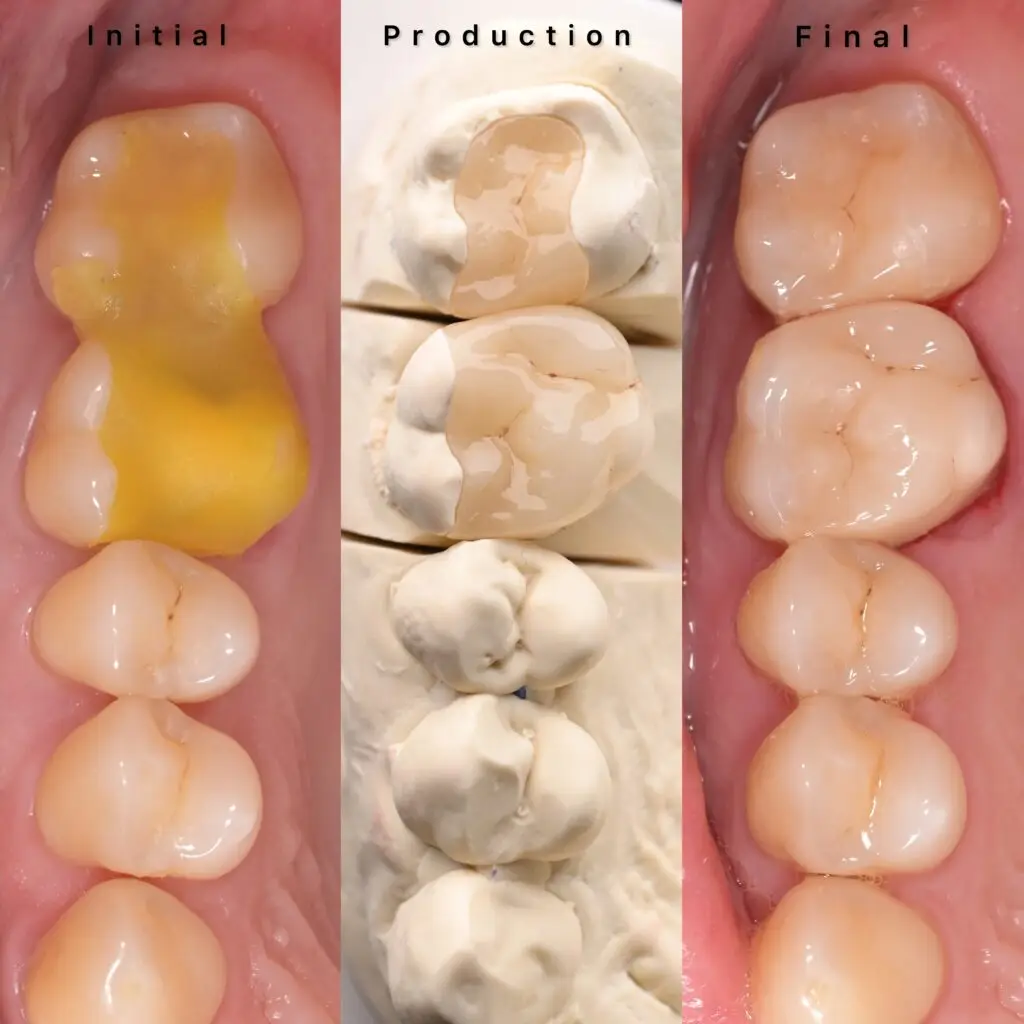
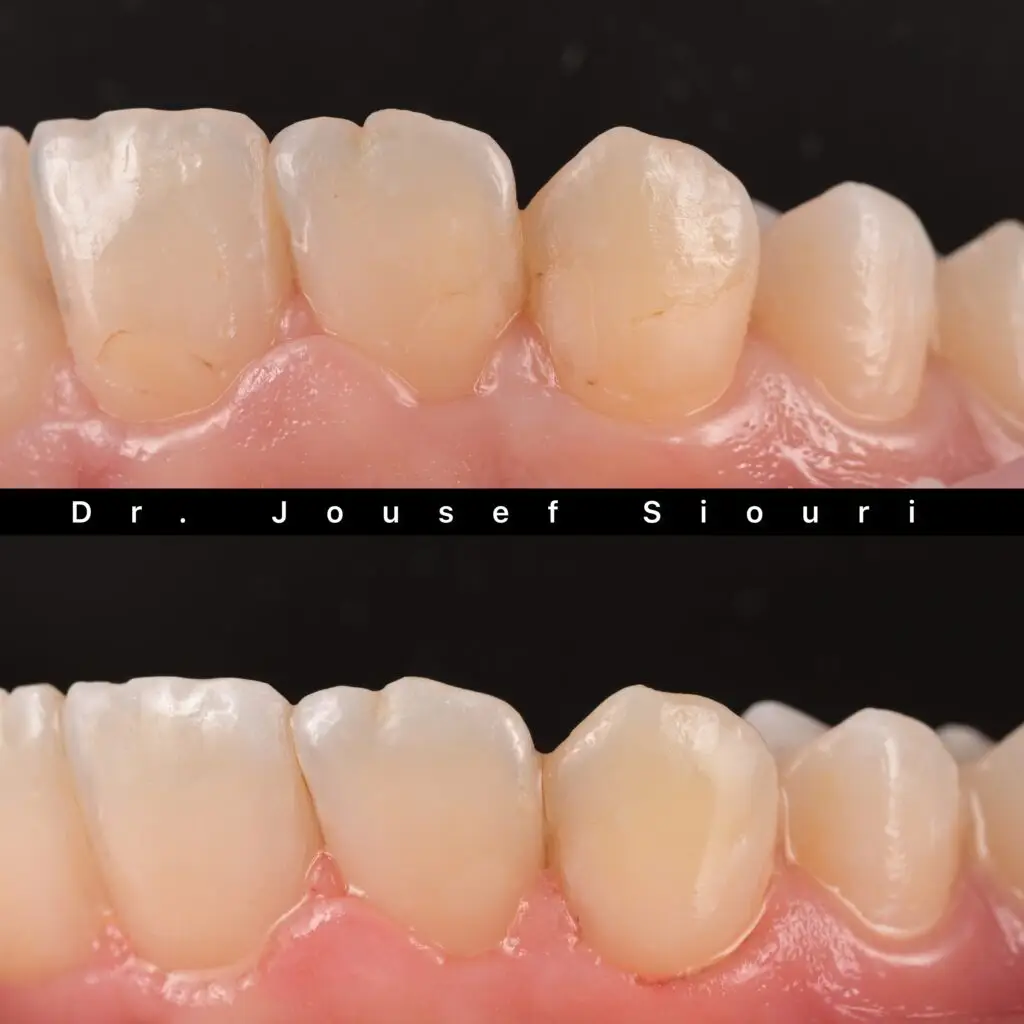
With good oral hygiene and regular professional check-ups, modern hybrid composites typically last 8–12 years. Ceramic inlays can last 15–20 years or longer, provided the restoration margins remain intact and the surrounding tooth structure is healthy. Longevity is supported by maintaining a consistent routine of biological prophylaxis and avoiding habits such as grinding or nail-biting that place excessive stress on restorations.
Both procedures are carried out under local anaesthesia, so you will not feel pain during treatment. Some patients experience mild sensitivity in the treated tooth for a few days after the appointment, particularly to cold or sweet stimuli — this usually resolves on its own within one to two weeks.
Yes. We regularly replace old amalgam fillings with tooth-coloured alternatives. The removal is performed carefully to minimise exposure to mercury vapour, and the cavity is subsequently restored with the most appropriate metal-free material for your situation. We recommend discussing your individual circumstances with us during a consultation before proceeding.
In Switzerland, basic compulsory health insurance (KVG/LAMal) does not generally cover dental treatment, including fillings. Supplementary dental insurance (Zusatzversicherung) plans vary considerably in what they cover. We recommend checking directly with your insurer before treatment. We are happy to provide a written cost estimate (Kostenvoranschlag) that you can submit to your insurer in advance. Some patients also consider aesthetic options such as veneers for front teeth where additional cosmetic improvement is desired alongside functional restoration.